Tag: Technology News (Page 5 of 7)

The Pianocade May Just Be Music to a Nostalgic Gamer’s Ears

When I look back at the 8 bit era of video games, the thing that impresses me most is the music quality. Think of classic themes like those in Mario, Zelda, and DuckTales, and marvel at how such a new concept like full video game music could have produced so many classics on a sound system that was as bare bones as can be. Even as modern games now come with sweeping full sound orchestras accompanying them, some still prefer 8 bit music as a medium, and not just view it as another wing in the nostalgia museum.

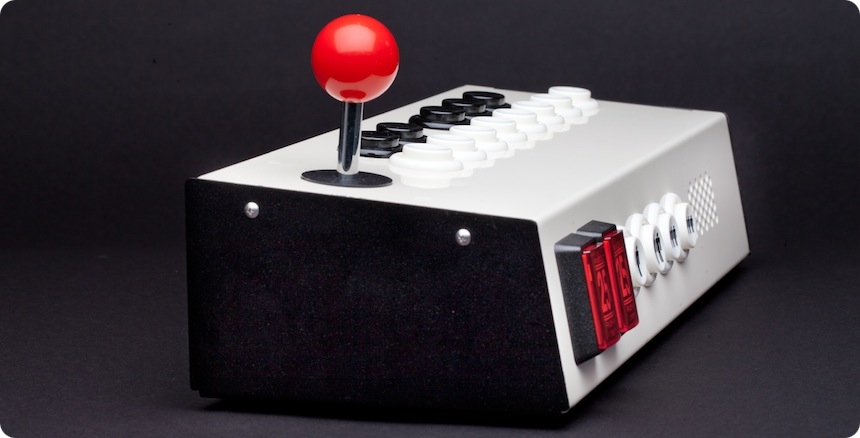
The makers of the Pianocade, also recognize the technological brilliance of the 8 bit era of melody and have engineered an equally brilliant device to help people replicate it. Underneath the minimalist arcade board design lies a pretty complex keyboard system meant to product an exact replication of the 8 bit music style. The Pianocade boasts a full range MIDI system and open source capabilities that allows for an immense level of user customization and sharing options. The built in synthesizer also produces an impressive level of sound quality with a 128 note sound range, and full tempo control. Now if you’re as musically inept as I am (I believe the technical term is “Tone Deaf”) then you don’t really need to follow all of the specs, and instead just need to check out the video of this thing in action.

Currently the Pianocade is only available for pre-order, and retails for $250CDN ($253 US) for a one octave model, or $325CDN ($329US) for the two octave version. Even better is the newly announced optional strap that allows for conversion of the unit into a keytar. The preorder period is estimated to be over on September 14th, at which time the first units will begin shipping out.

Obviously if you want to recreate 8 bit music there is a wide variety of digital options available (hell, it was digital to begin with). But since the goal of this project is to recreate the arcade experience of a room filling with a variety of video game music for all to enjoy, if you have the skill and the means this could make for one interesting party piece, conversation starter, or even a legitimate addition to your recording studio, as if you have the need, this device certainly has the capabilities.


Plants are Alive with the Sound of Music, Hills to Follow in 2014

Today on this gadget blog designed to bring you all things exciting and hi-tech, I bring you plants.

What’s that you say? Plants aren’t hi-tech and are barely exciting? Well, on any other day about any other plant, you may have a point. These plants, however, were designed by students at Keio University in Tokyo to be just about the most exciting, and unique plants in existence. That’s because they are built with a series of LED lights, sensor modules, speakers, and good old fashioned programming that turn them into musical instruments.

Umm…..Not Quite.

Dubbed “Sound Gardening,” they’re designed for multiple users to experience at once. The plants are real, and respond to touch and movement to generate certain noises, music, and voices. Certain plants work together to create a melody, and when a series of proper sensors are activated, a bonus sound appropriate to the current melody is played. The technology that powers this invention is fairly impressive, yet oddly, according to one of the sound designers on the project, the most difficult part was actually getting the plants to sing. Along with voices being triggered by specific motions, the voice feature is also used to alert passerbys of the plant’s capabilities as it will whisper “Hey, over here” in Japanese after 30 seconds of inactivity.

The team behind this project imagines that it can be used as a group musical activity, but their main motivation behind it seemed to be as a creative outlet to allow them to work on something outside of the normal creative constrictions. In short, they wanted to have fun with this project, and they’ve already noticed how much fun others have when they try it as well. Being in nature is very relaxing in and of itself, and when you combine interactive social music in with that, you have a device that can produce sheer joy and pure imagination. In a world where technology seems to be aimed at making our lives more and more stressful, inventions like this that first look like mere novelties are sometimes more important than they appear.

Is Sony’s New TV the Worst Use of Money Since Setting it on Fire?

At this point I thought we’d actually hit something of a peak in modern television performance. I mean there’s always the concepts out there for ultra-realistic 3D models or virtual reality type systems, but strictly speaking about traditional displays, and improving current technology, I look at my HDTV and think, “This is about as good as it gets, and I don’t think I need anything more.”

Sony’s hoping there aren’t too many people in the world like me, as they are aiming to put a TV on the market by the holidays that can only be described as excessive. Specifically, it’s an 80 inch LED TV that makes use of the new, better than 1080p, 4K Resolution that will serve as the flag bearer to Sony’s new XBR line. There’s no way to sugarcoat the price, as it will retail for a clean $30,000.

Now understand this. This TV cannot make you a sandwich, wisely invest your money (quite the opposite), take care of your pets while your away, or anything like that. In fact, the only thing that we know it can do so far is display a really pretty picture on a really big screen, that we can’t really comprehend because the only thing that can display a picture as clear as itself, is itself. Not only that, but Sharp is already working on an 8K TV that could debut even cheaper than this model.

Some have already pointed out that this model is actually cheaper than a previously announced 36 inch model by Eizo Nanao, and have gone back in time to remind us that the first plasma TVs debuted in 1997 for $35,000 and weren’t even capable of true HD. While that’s all very interesting, I hate to say that I don’t think the argument exists yet that will justify the purchase of a $30,000  TV that will be outdated by this time next year. Plus, I’m fairly certain that there isn’t much technology out there that can actually properly make use of this kind of display.

But hey, to be fair I’m not an early adopter, socially awkward type with a trust fund who I assume this TV is marketed at.

This Chinese Robot Army Isn’t Quite What I Was Expecting

They say the art of making authentic Chinese noodles from scratch is nearly extinct. If you watch this video from “Anthony Bourdain: No Reservations” of one of the few people left who can truly do it (it starts at about the 2:18 mark), you’ll understand why.

Much like many other aspects of the ever expanding nation though, rather than lament or dwell upon what was, they are instead moving forward with incredible speed and extreme ferocity. How does one do that in something like the noodle making industry? Why robots of course.

That’s a noodle making robot that frighteningly resembles Ultraman. Now while they can’t make the noodles from scratch (yet) what they can do is slice the noodles with an accuracy and quickness that allegedly outstrips the average human chef capabilities.  They’re cheaper than the average chef as well, with the figure being tossed around that a cook costs $4,700 a year while one of these robots will only set you back $2,000.

But surely no one is going for this right? Replacing trained chefs with machines that can only act in a limited capability? Well in case you haven’t been paying attention to world industry the last several decades, of course they are. Since manufacturing has started in 2011, 3,000 of these machines have already been sold, and more are in production.

These robots are obviously pretty far away, technologically speaking, from completely replacing chefs, but the fact that they are taking jobs at any level right now is pretty incredible. Ignoring the gross moral questions that replacing humans with robots in these positions raises, you also have to consider that if this trend takes off in full, the restaurant industry will suffer long term for it. It takes years of hard work for chefs to become great, or even good, and this prevents entry level cooks from gaining the practical experience needed to start that path. In certain parts of Japan, if you want to cook sushi, you must first cook nothing but rice for years and years before you are even allowed to touch a fish. It’s not the point a machine could make the rice better, the rather that the chef must gain the necessary appreciation and technique of one of the most base and essential parts of the meal before moving on the part of the star making part of the dish.

Oh, and by the way, giving a robot glowing pulsating yellow eyes, a furrowed brow, and a knife under any circumstances is not cool. In fact, that whole design seems excessive for a machine that’s only function is supposedly to shave noodles. Are we really supposed to believe that’s this things only purpose?

Yeah, and the “Chopping Mall” robot just flips pizzas

With New Search Parameters, Google May Actually be Taking Action to Cut Down on Pirated Material

What happened to you Google? You used to be cool.

As part of their collaboration with the film and music industry, Google is working on modifying its search engine parameters to filter out pirated material. Google’s current search method works off of hundreds of variables to determine which webpages are the most relevant to your search. The largest factor is possibly your page rank, which is determined, in part, by how many sites link from you.

A new variable will soon be added, however, that takes into account the number of valid copyright removal notices a site receives. Basically, the more that a site receives, the lower they fall on the overall search rankings. Since Google is processing more copyright claims than ever before, they feel that they are primed to recognize sites with pirated material, and divert searchers to legal sites like Hulu, and Spotify instead for their content needs.

So far the Recording Industry Association of America, and the Motion Picture Association of America are both highly supportive of this move as they feel it represents the largest step ever taken by Google to protect copyrights and combat piracy, and are happy to be getting support from one of the biggest companies in opposition against the recent Stop Online Piracy Act bill.

I’m not as convinced. This surely sounds like a proper move by Google, but really how much is it going to help? For one thing, can even Google process enough copyright claims in time to shut down that many websites from appearing in top hits, and even if they can couldn’t you just go to page 2, or *gasp* 3 on your search to find the site? Also, wouldn’t smaller sites with the same material just pop up instead in specific search results as the bigger ones go down, creating an endless loop of fresh pirated material? Speaking of search hits, will this still filter out specific searches? In the interest of not outing anyone, if I search say, Swashbuckler’s Cove for a torrent of “Game of Thrones,” wouldn’t Google still take me directly there regardless of the copyright claims?

What’s even better is that no mention of the Google owned YouTube is found in any of the statements on this matter. You know, one of the world’s most popular and prolific websites where just about any copyrighted material can be found free of charge (except for porn of course, in which case you need to go to PornTube, YouPorn, or PornPorn).

So wait a minute. Is it possible that Google just pulled a fast one on the continually technologically ignorant music and film industries by doing something to please them, while effectively doing nothing to aid them?

Pretty sneaky Google.

« Older posts Newer posts »

© 2026 Gadget Teaser

Theme by Anders NorenUp ↑