Category: News (Page 27 of 130)

The CruxSKUNK Might Provide the Perfect iPad Keyboard

For a company all about upselling (just try to leave an Apple Store without being sold a case for your iPhone) Apple themselves haven’t done a great job of providing an accessory to fix the iPad keyboard dilemma.

See as beautiful a device as the iPad is, its on screen keyboard doesn’t exactly lend itself to any use more urgent than internet browsing. This severely hinders many of the features the wonder tablet can offer. Apple, along with several other companies, offer Bluetooth keyboard accessories, but the results of trying to use one are often awkward and make enjoying using your iPad more burdensome than need be. Some companies like Belkin, Zagg, and Kensington have tried to get around this problem with keyboard/case hybrids that turns your iPad into something that closer resembles a laptop. Reactions and results are mixed on those hybrids, with many of them still coming off as awkward, causing severe limitations in mobility, or worse just plain cheap.

Where others have failed in resolving this problem, though, an unlikely savior, with an unlikely name for a savior, may have emerged from the funding fields of Kickstarter.

It’s called the CruxSKUNK (what?) and it may succeed where other, similar products have failed by using some of the same product synergy Apple is so fond of themselves. That’s because, when you put your iPad into the case, the entire unit is made to resemble a Macbook Air in weight, looks, and feel. The metamorphosis is genuinely impressive, as is the keyboard itself which features nice large type-face, full keyboard set-up and range, and a nicely thin base (6mm). Aesthetically, it is the most immediately pleasing case of its kind on the market.

But the CruxSKUNK isn’t trying to get by on its looks. Instead the real beauty of this case is its hinge that lets the user place their iPad in a variety of positions to suit their needs. The idea is to provide the perfect set up for watching movies, working on documents, or playing games all without having to remove the case. After seeing the video of the CruxSKUNK in action, its hard to believe that they haven’t achieved just that. If you do need to remove your iPad, however, the Crux also allows you to do so without much in the way of hindrance.

Currently the CruxSKUNK has already well exceeded its revamped $90,000 goal, with over $191,000 dollars earned and 20 days still left to go for funding.  The only available backing options left range from $155 for a CruxSKUNK and nice leather carrying sleeve, to $1500 plus for 10 cases and 10 sleeves. Obviously, that’s not cheap when compared to some of the competitors on the market. However, since the main complaint of those competitors is how cheap their actual products are, you ultimately have to ask yourself if your need for an iPad keyboard case is truly great enough to warrant going for the top of the line. If it is, even in its pre-production phase, the CruxSKUNk appears to be just that.

GoDaddy Becomes Just Another Anonymous Victim

Today, GoDaddy.com became the latest victim of the hacking group Anoymous.

The damage to the popular webhost is not necessarily long term, but it did force millions of websites that the site supports to go down as a result. The attacks themselves seem to be the works of the hacking group, of whom a sole member has claimed responsibility for the attacks via their Twitter handle AnonymousOwn3r, and said it was done in an effort to expose the security weaknesses of the site. Currently, GoDaddy has announced they are aware of the problem, and are working to resolve it as quickly as possible.

While the scope of this attack (again, millions of websites went down as a result) makes this event certainly newsworthy, it’s inevitably but another notch in the post in a long run of Anonymous attacks. The workings and power structure of the group (if one does in fact exist in the classic sense) are certainly ambiguous, and it often becomes difficult to properly tell exactly what events can be truly attributed to the group, and which ones are done in their name.

Also of ambiguous nature is the exact motivation and intentions of the organization.  In one moment they appear as anarchists, yet a swift glance away yields their image to that of political heroes. Even still, turn your back on them, and the next you hear, you in fact  found yourself face to face with one of their more popular monikers, that of cyber terrorists.

The reason for these profile inconsistencies has to do with the variety of actions performed, or supposedly performed, by the group. While the volume, and nature, of these actions are alarmingly astounding, there are a few that stand out above the rest for one reason or the other. The following are among them:

The Chris Forcand Bust

In one of the most early and public instances of “Anonymous justice”, Chris Forcand was arrested for attempted molestation of a minor, exposure, and weapons charges after members of Anonymous set up an online sting by posing as underage children, and providing the evidence (which included photos of Forcand exposing himself) to the police. When Anonymous would later claim responsibility for the actions, the event would eventually become cited as one of the first known cases of internet vigilantism.

The No Cussing Club

In one of the more petty acts of supposed Anonymous action, California teenager McKay Hatch thought it might be a good idea to start the No Cussing Club with the goal of making people aware of the overuse of profanity. Hackers shut the site down, and got a hold of McKay’s information and leaked his phone number and address to the public resulting in a barrage of hate mail, prank calls, and porn and pizza deliveries made to his residence.

It’s an incident that would prove that no target was too big or small for the considerable capabilities of the group.

Operation Payback

A multi-tiered and ambitious campaign, Operation Payback started a retaliation against the companies supporting anti-piracy campaigns.

The attacks done in the name of this campaign are almost too numerous to list here. They’ve included shutting down the Playstation Network in retaliation against Sony, shutting down a law firm website and releasing private documents they found within, shutting down the website for the Associação do Comércio Audiovisual de Portugal (ACAPOR) which pledged to keep the people of Potruguese from accessing The Pirate Bay (and then redirecting the site directly to Pirate Bay), and attacks against numerous government institutions and politicians.

Operation Payback would later result in Operation Avenge Assange, which was in response to the infamous WikiLeaks shutdown, that also resulted in numerous attacks against a variety of big names including PayPal, Amazon, and large Credit Card companies. Under any name, these operations represent some of the largest and most focused online attacks ever seen against high profile organizations.

2009 Iranian Election Protests

Many of the actions of anonymous are done in support of those they considered to be the “disenfranchised.” In 2009 the people of Iran joined these ranks when the controversial results of the presidential election were announced leading to national protests. In a coalition with the Pirate Bay, Anonymous launched the website Anonymous Iran. The purposes of the site was to get around the restrictions set up by the Iranian government that outlawed news updates about the protests, and provide free information to the citizens.

It was one of the more official acts of the group and emphasized their particular balance of political contributions, and wide scale personal attacks.

Barr, Aaron Barr

One of the more infamous cases of Anonymous attacks, Aaron Barr was CEO of the internet security firm HBGary Federal.  Barr launched a one man campaign of sorts where he infiltrated online hotspots for Anonymous member gatherings, and started collecting data. At one point, he felt he had supposedly acquired knowledge of the majority of the Anonymous leadership and planned on exposing them to the FBI.

Unfortunately in what the kids call a “bad move bro” he also decided to publish his investigation in the Financial Times. When members of Anonymous found out, their vengeance was thorough as they shut down Barr’s company website (an internet security company mind you), altered all of the passwords used internally on the site, wiped out significant amounts of the company’s database information, and published over 50,000 of the companies e-mails for public viewing. As a finale, and in the ultimate show of one-upsmanship, they also erased Barr’s personal iPad.

In order to get them to stop, Barr had to issue a public apology for his actions and also resign as CEO. HBGary would also never recover completely from the incident, as their name is still associate with the incident to this day.

Anonymous vs Scientology

Batman has the Joker, the Hatfields had the McCoys, Maggie Simpson had that baby with the one eye-brow, and for a rival, Anonymous has the Church of Scientology.

It began when Anonymous released a video that showed Tom Cruise spouting a slew of somewhat maniacal “facts” about the church of scientology. As a result, the church put their full legal force into getting the video removed from public, and as a general protest to everything the church represents, the hacking group went into overdrive in the name of revenge.

One of the most significant actions of this campaign was the organizing of physical protests across the world outside of various scientology institutions, where many protestors could be seen wearing Guy Fawkes masks, made popular by the “V for Vendetta” story, in show of their support to Anonymous. The sheer number of worldwide protesters that showed up were astounding, and their methods of protest, while peaceful, were notable in their organization and enthusiasm. Of course, the usual Anonymous methods of protest, including hacking, prank calls, and rigging Google so that the search “dangerous cult” lead to the Scientology website as the top result, were also employed.

To this day the war against Scientology wages on for Anonymous, and has become their signature movement, known as Project Chanology. Along with providing some of their most notable manifestos and iconic images, it’s a movement against just about everything the group considers wrong. While many aspects of the group Anonymous are debatable, there is no denying the social impact of this movement regardless of any personal feelings towards it.

Bing Invites You to a Five Round Fight With Google

Well, I’ll give Microsoft and Bing this. They’re clearly not going down without a fight. In fact, thanks to their latest marketing ploy, that is exactly what they are seeking.

If you go to the website Bing It On, you can take part in a challenge that pits the search engines Google and Bing against each other in a side by side comparison. You enter a search term, and the results generated by both pages are given to you, along with the option to choose which results were better, or to declare it a draw. At the end of five searches, your score is tallied to reveal which search engine was your overall preference. Of course, to make sure that you have an open mind about the subject, this is a blind test and doesn’t make an indication as to which search engine is which when the results are displayed, Pepsi Challenge style.

Although, my guess is the average internet user is probably aware when they are looking at Google search results.

And that’s what makes this competition so bizarre. Even though the end of the test shows that overall results favor Bing at a 2-1 ratio, after taking the test three times, 15 total searches, my personal results came up with a draw once and Google coming ahead twice. While I freely admit that some of this may have been me subliminally recognizing Google and choosing it, even my Bing preferences were little more than the result of a mental “coin flip” of sorts that resulted from me not wanting to choose the draw option and cop out.

In fact the biggest conclusion I drew from this contest is that Bing is on par with Google. Congrats to them for that, but I don’t think that was ever really the question was it? Proving you’re as good as Google doesn’t make you Google, and if Bing really wants to close the gap in the search engine market share, it should probably spend more time working on what makes it different from the search giant, and not proving that if you type donuts into Bing, you get equal or slightly more appealing results for donuts than Google.

In a bit of irony about this challenge that kind of highlights that predicament, using Bing as one of the search subjects produced better results through Google, and I heard about the challenge initially using…Google.

But hey, it’s a fun little use of five minutes if you can spare it.

Plants are Alive with the Sound of Music, Hills to Follow in 2014

Today on this gadget blog designed to bring you all things exciting and hi-tech, I bring you plants.

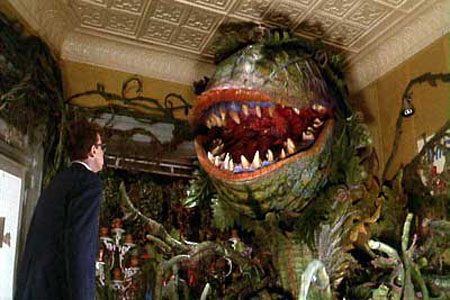
What’s that you say? Plants aren’t hi-tech and are barely exciting? Well, on any other day about any other plant, you may have a point. These plants, however, were designed by students at Keio University in Tokyo to be just about the most exciting, and unique plants in existence. That’s because they are built with a series of LED lights, sensor modules, speakers, and good old fashioned programming that turn them into musical instruments.

Umm…..Not Quite.

Dubbed “Sound Gardening,” they’re designed for multiple users to experience at once. The plants are real, and respond to touch and movement to generate certain noises, music, and voices. Certain plants work together to create a melody, and when a series of proper sensors are activated, a bonus sound appropriate to the current melody is played. The technology that powers this invention is fairly impressive, yet oddly, according to one of the sound designers on the project, the most difficult part was actually getting the plants to sing. Along with voices being triggered by specific motions, the voice feature is also used to alert passerbys of the plant’s capabilities as it will whisper “Hey, over here” in Japanese after 30 seconds of inactivity.

The team behind this project imagines that it can be used as a group musical activity, but their main motivation behind it seemed to be as a creative outlet to allow them to work on something outside of the normal creative constrictions. In short, they wanted to have fun with this project, and they’ve already noticed how much fun others have when they try it as well. Being in nature is very relaxing in and of itself, and when you combine interactive social music in with that, you have a device that can produce sheer joy and pure imagination. In a world where technology seems to be aimed at making our lives more and more stressful, inventions like this that first look like mere novelties are sometimes more important than they appear.

Is Sony’s New TV the Worst Use of Money Since Setting it on Fire?

At this point I thought we’d actually hit something of a peak in modern television performance. I mean there’s always the concepts out there for ultra-realistic 3D models or virtual reality type systems, but strictly speaking about traditional displays, and improving current technology, I look at my HDTV and think, “This is about as good as it gets, and I don’t think I need anything more.”

Sony’s hoping there aren’t too many people in the world like me, as they are aiming to put a TV on the market by the holidays that can only be described as excessive. Specifically, it’s an 80 inch LED TV that makes use of the new, better than 1080p, 4K Resolution that will serve as the flag bearer to Sony’s new XBR line. There’s no way to sugarcoat the price, as it will retail for a clean $30,000.

Now understand this. This TV cannot make you a sandwich, wisely invest your money (quite the opposite), take care of your pets while your away, or anything like that. In fact, the only thing that we know it can do so far is display a really pretty picture on a really big screen, that we can’t really comprehend because the only thing that can display a picture as clear as itself, is itself. Not only that, but Sharp is already working on an 8K TV that could debut even cheaper than this model.

Some have already pointed out that this model is actually cheaper than a previously announced 36 inch model by Eizo Nanao, and have gone back in time to remind us that the first plasma TVs debuted in 1997 for $35,000 and weren’t even capable of true HD. While that’s all very interesting, I hate to say that I don’t think the argument exists yet that will justify the purchase of a $30,000  TV that will be outdated by this time next year. Plus, I’m fairly certain that there isn’t much technology out there that can actually properly make use of this kind of display.

But hey, to be fair I’m not an early adopter, socially awkward type with a trust fund who I assume this TV is marketed at.

« Older posts Newer posts »

© 2026 Gadget Teaser

Theme by Anders NorenUp ↑