Author: Matt Byrd (Page 29 of 33)

Intel Wants To Make Wireless Charging Standard By 2013

If you look hard enough, it’s pretty easy to cut wires out of your life.

Yet for all of the advancements in wired freedom we’ve enjoyed over the years, we still find ourselves needlessly tethered to an outlet, or USB port when it comes time to charge our phones. Not that there haven’t been innovations in the field of wireless charging, but they’ve been few and far between and, to be perfectly honest, not that exciting. This is due to the fact they usually still require a reliance on some sort of physical device, whether that be a pad or a case.

The trouble, as you our astute reader has no doubt considerd, is that charging requires electricity, and electricity sufficient enough to perform a charge has to come from somewhere. Plus the cost of using the little technology that is available for wireless charging, and the technical trouble that is still associated with the process, just isn’t worth it for most companies.

But according to Wired, Intel might have an answer to the wireless dilemma at hand.

Well soon anyway (hey, we are called Gadget Teaser). By 2013 Intel is looking to have wireless charging available for their lines of smartphones via certain models of Ultrabooks. There is no evidence to suggest that the technology is applicable yet, but the idea is that the Ultrabook will be able to act as a conduit of sorts to charge your phone. According to Intel, as long as the phone is within a reasonable range of the Ultrabook, it will charge.

Now Intel has been working on some pretty impressive wireless charging technology for a while now, but if this tech really does exist in the way that they claim it does this would be the most significant advancement in the field yet announced. If it is possible to use a single device as a wireless hot point to produce a charge, then the potential for a truly wireless future may be more imminent than anybody could have anticipated.

3D Printing Produces a Miracle

You know, until today I thought the best use for one of those 3D printers like the MakerBot was fashioning a Beethoven bust.

Fortunately for the rest of the world, people better than myself are always looking to use revolutionary technology for revolutionary purposes beyond garnering Youtube hits. In fact 3D printing has recently been used to help a 2 year old girl named Emma. Emma, was born with a rare defect known as arthrogryposis multiplex congenital. Its main effect is weakening and shortening an infant’s muscles and joints to the point they are nearly unusable. After a long and burdensome series of treatments, doctor were able to fix Emma’s legs and get them back to functioning again. However, modern medicine had no answer for Emma’s arms, which they felt she would never be able to use via her own free will again.

That’s where a research team in Deleware came in. Since Emma was so small, and underdeveloped, she would need a device to help her use her arms that was as lightweight as it was durable. Thanks to 3D printing technology, the team was able to build an exoskeleton that augmented Emma’s arm use, and allowed her to use them for the first time with few limitations.

Obviously this is a story of technology overcoming a horror that no one (much less an infant child) should have to deal with. However, watching that video, it’s also obvious that science isn’t the only victor here, as the triumph of human spirit makes a noteworthy appearance as well. The smile on Emma’s face even before being able to use her arms, was nearly identical to the one after, as her unwavering spirit refused to be burdened by mere physical limitations. Only the look in her eyes as she discovered she could do new things like play with blocks, or lift a cup, or a million other little actions changed to reflect a sense of unparalleled wonderment.

It’s that look though that makes it clear that any more research that can be done in this field should push forward with all support and full steam, so that we can continue to see news like this, and similar looks in the eyes of many children for years to come.

The Hunt for Red September Looks to Recreate the Submarine Experience

As far back as I can remember, I always wanted to be a submarine commander.

Ok, that’s a lie. But I did watch a lot of “Das Boot” in high school, and I’ve always preferred the “Star Trek” style of space combat (submarine style) to “Star Wars” (airplane dogfighting). Now usually when I draw such a vague fascination with something tangible that I don’t feel like putting the effort forth to actually achieve, I turn to video games to feed the need. However, the world of submarine simulation video games are all mostly in the same family as the “Microsoft Flight Simulator” games. Which is to say, they’re so incredibly realistic, by the time you get a handle on them, you would have been better off actually becoming a real captain/commander.

Well now, in a weird meta twist, where video games have failed to properly create an entertaining simulation of real life, real life has stepped in.

The creative geniuses at 1.21 Jigawatts are looking to defend their Red Bull Creation contest crown with their new invention “The Hunt for Red September.” It’s a built to scale submarine model simulator that requires a player to operate the right series of valves, levers, and buttons (as instructed by an on board voice system) in order to prevent a series of disasters. Fail to complete the simulation in its 2 minute time limit, and the model sprays you with an absurd amount of water as punishment. Even cooler is the social interaction features, which allows people to tweet “depth charge” to the simulation causing the entire machine to rock back and forth via hydraulics, and allows for the ability for enough people to tweet for a torpedo to attack the sub, the incoming progress of which can be followed via an onboard LCD screen.

Now if this sounds awesome, it’s because it is. However, this is no friendly game. Players have mere seconds to properly multitask the required functions in the right order before becoming drenched with water bursts. It apparently takes some serious skill to complete the simulation, which is only appropriate as it matches the skill put into this project in the first place. The team built this model in just 72 hours out of mostly spare parts, with the intention of winning the 2012 Red Bull Creation contest, and therefore making it to the Maker Faire in New York this September.

While there are no current plans for this model beyond that, I’d personally like to see Fortune 500 companies start using one in lieu of job interviews.

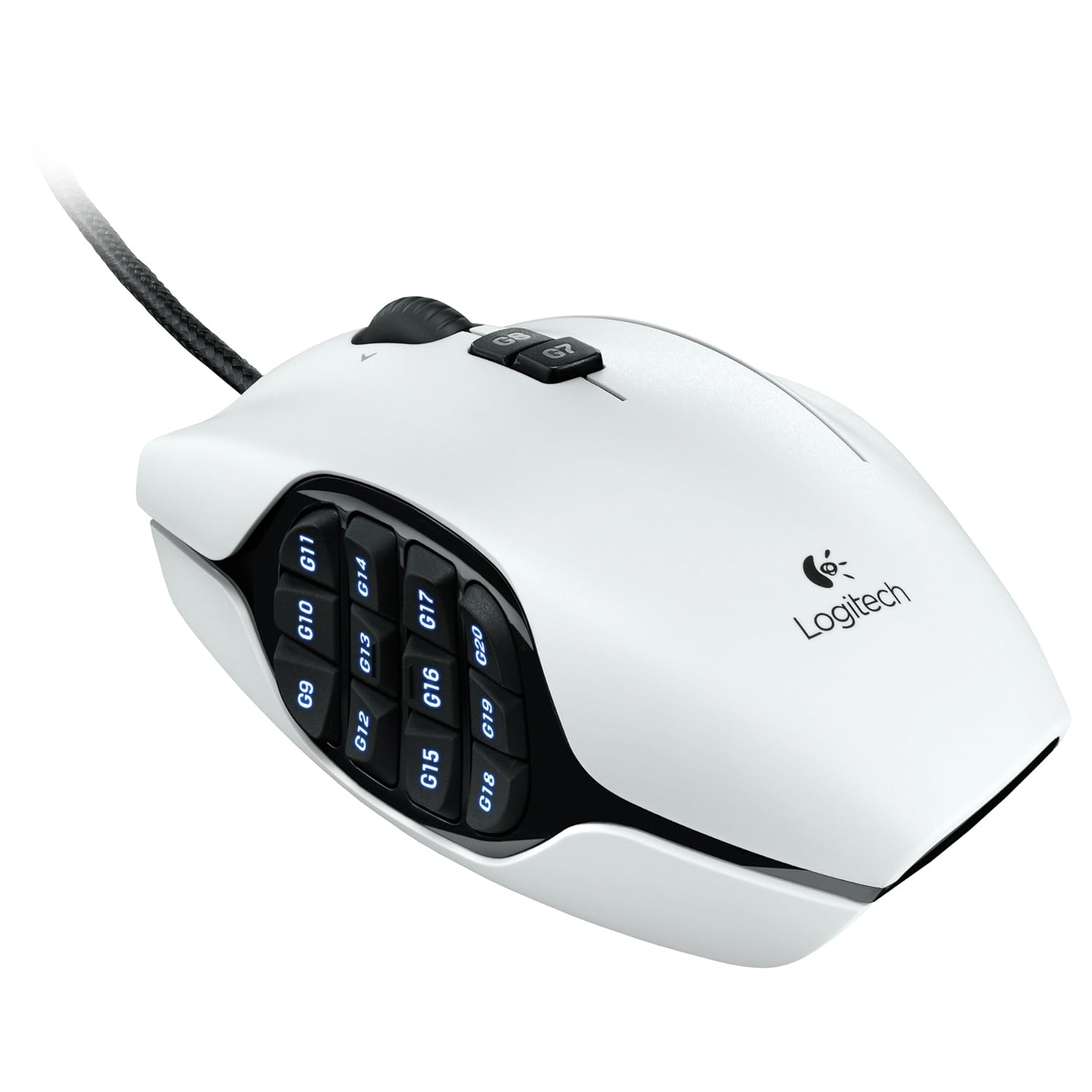
They Still Haven’t Built a Better Mousetrap, But Logitech Has Built a Better Mouse

I remember my old computer science teacher telling me that the computer mouse is a handicap. Her theory was that since so many features can be accomplished quicker using keyboard hotkeys, relying on a mouse to navigate your digital world was only for technologically illiterate people who don’t have a working knowledge of keyboard shortcuts. Now while she was clearly pretty hardcore in her beliefs, I’ve got to admit that I do find myself thinking back to that theory when I use a computer, as I catch myself more and more often not relying on the mouse as a default.

There is, of course, one notable exception. As well designed as Sony, Microsoft, and Nintendo have made their controllers over the years, there is still no gaming controller that can compete with the mouse and keyboard set up. It’s the perfect marriage. The keyboard’s comfortable and familiar array of buttons allows for a wide range of features literally at your fingertips, while the mouse provides a level of fluidity and pixel perfect accuracy that no console controller could ever hope to match.

Now accessory mainstay Logitech may have made the mouse even more useful to gaming. That’s because their new G600 gaming mouse takes some of the functionality away from the keyboard, and gives it back to the mouse, just where my old teacher always said it belonged. Equipped with 20 buttons (and a “G switch” that can double button functionality) this mouse was specifically designed to allow MMO gamers to easily access hot key features. Generally though, this little gadget is useful for all types of genres, especially RPGs and RTS games that also rely heavily on quick key access. Not to mention it boasts the extreme durability, rapid movement speed, and pinpoint accuracy you would expect from a gaming mouse, as well as vanity features like customizable color LED color schemes for the buttons and tracking.

Now, this mouse hardly breaks new ground in the field of gaming mice, as various models over the years have featured available buttons before. What I do love about this one, though, is the overall design Logitech has implemented. Not only does it look slick and smooth, and boasts stats that compete with some of best mice available, but unlike some other, similar gaming mice, this one actually looks like it was designed for human hands. Plus considering how I just cleaned house during the Steam Summer Sale, I’m starting to consider the G600s somewhat hefty $79.99 price tag an investment.

Google’s New Service Looks to Make Mobile E-mail Widely Available

Of all the evil, soulless, money grubbing corporations that ultimately run the world, I’ve got to say that Google consistently finds itself coming off as the most pleasant. Between their exceptional employee benefits, and those awesome Google Doodles, they really do seem like the simple global power next door types.

In their latest move of philanthropy, Google is now offering cell phone users in Africa a service called Gmail SMS. This will allow users without high tech cell phones, or conveniences like WiFi hotspots or 3G capabilities, to send and receive Gmail messages through a phone’s basic text messaging service. The e-mail service is free of charge, and the only incurred fees are tied into a plans standard text messaging rates.

This may not seem like a big deal to most, but it’s a simple gesture that could mean a lot to cell users in certain underdeveloped parts of the world. The technology to do something like this isn’t exactly mind blowing, but for Google to consider that maybe people who can’t afford hundreds of dollars for a phone, and/or may not have any widespread internet services available, might just enjoy actually having a modern convenience now and again is the kind of move that should make similar service providers take notice, bite their pride, and start to offer the service themselves if possible.

Currently the service is available in Ghana, Kenya, and Nigeria, but it looks like the ambition is to offer Gmail SMS to as many markets as possible. Considering the large number of cell phone users in Africa, for those in underdeveloped parts of the continent (and similar areas of the world), the expansion surely can’t come soon enough.

« Older posts Newer posts »

© 2026 Gadget Teaser

Theme by Anders NorenUp ↑