Check out the new survey below about how tech savvy you are and you’ll be entered into a drawing to win a new iPad! Gotta love free stuff!
Survey provided by Castle Cover
Check out the new survey below about how tech savvy you are and you’ll be entered into a drawing to win a new iPad! Gotta love free stuff!
Survey provided by Castle Cover

Thefts of smartphones and other high tech mobile devices have become one of the greatest fears of consumers in major metropolitan areas. While sometimes fears like this are the result of media sensationalism, the numbers that keep coming out to support this trend are staggering.
In New York City alone, between January 1st and September 23rd of this year, the NYPD have received reports of 11,447 thefts of just iDevices. That’s a healthy 40 percent jump in cases from that same time the previous year, and also barely takes into account the time of the new iPhone 5’s release. In New York, and other large cities, this has led to a plastering of ads in subway stations, street corners, and televisions that urge citizens to be more aware of their surroundings and their usage of their devices to try to trim down on theft. This has also been coupled with sting operations to catch people selling stolen devices in bulk, as well as a greater police presence in areas like subway stations where theft is most common.

For their part, Apple has long touted a free “Find My Phone” app, that can not only locate a stolen phone using GPS features, but also lock the device remotely with a password. Android users also have a range of security apps available such as Cerebus, which can take photos of your device’s current location, perform system wipes and locks, locate your phone remotely, and even take an automatic photo if someone enters your password wrong. Even though some of the more clever burglars are becoming aware of these apps and finding ways around them, it is still somewhat reassuring to know that the manufacturers themselves are also aware of this issue and are at least attempting to take all the steps they can to help out, much like the police seem to be doing
However, given the jump in thefts even with such measures in place, there are those who feel that it’s time for phone carriers to step up and do their part.
Specifically, the movement is gaining steam in Canada where an outbreak of violent crimes relating to stolen smart devices has the country in an uproar. The government is insisting that phone companies create a stolen smartphone and tablet registry, before they must force them to do so. The idea of a registry would be to prevent the resale of stolen devices by providing an official record of them. A similar action is also being called for by some in America where the crimes are equally rampant.
While it may not represent a perfect solution to the problem, it instead encourages a measure of corporate responsibility. Why hasn’t this been done yet? The biggest reason is cost, as phone companies are apparently shuddering at the financial implications of such a movement, although exact figures haven’t been provided. Canada’s government is asking for the major carriers to provide that information to them in an effort to get the ball rolling on the initiative once and for all. There is also loose talk that a national registry would hurt the providers in the lucrative second hand markets they encourage, though this is not the official statement.

Considering the reliance people put in their smart devices, it’s uncomfortable for many users to think that the age old crime move of snatch and grab is more dangerous (and lucrative) than ever. While awareness movements prompt users to not display their devices in public places, understandably consumers feel like they should be able to use their phones and tablets somewhere besides the safety of their work or homes. It’s also a somewhat insulting idea that victims of theft are somehow “asking for it” even if there are incidents of displaying an item in high profile prior to its taking.
Whether or not it is the ultimate answer then, it seems like the only party not taking a greater leap in prevention are the phone companies, and a national registry of stolen gadgets would at least add another weapon to the fight. Otherwise, we may see more and more violent incidents of robbery, and of people misguidedly taking actions into their own hands to try and protect their prized possessions.

Christmas shopping has certainly evolved over the years. With gadgets now dominating our lives, they also dominate our Christmas shopping, even for younger kids as the age minimum for smart phones in many families keeps getting lower. Sure, boys still love footballs and girls love their dolls, and parent will buy all sorts of things large and small. Clothes and stocking stuffers and trivial gifts like cards puzzle frames are still common, but gadgets have certainly become the most important item on many gift lists.
The gift guides will be coming out soon, and you can expect the iPhone 5 to dominate many of these lists, and that shouldn’t be a surprise. The only thing holding it back is that so many people have already purchased one, as the introduction of the iPhone in many ways was an early Christmas for those involved in the logistics of delivering the new phone. The iPhone hysteria is certainly good for companies like UPS and serves as a warmup for the crazy Christmas season.
Despite the maps fiasco, the new iPhone 5 is obviously a hit. But it’s certainly not for everyone with the high price tag. Parents in particular will be searching for less expensive alternatives, and many parents frankly don’t want to spoil 10-year old kids with a new iPhone. Yet the pressure remains. So scour the upcoming holiday gift guides for other ideas that will make the kids smile.
I’m not a handy person in the traditional sense. I mean, I can work a hammer or screwdriver but prefer to only do so in the event of a zombie invasion (and I don’t mean hanging up boards).
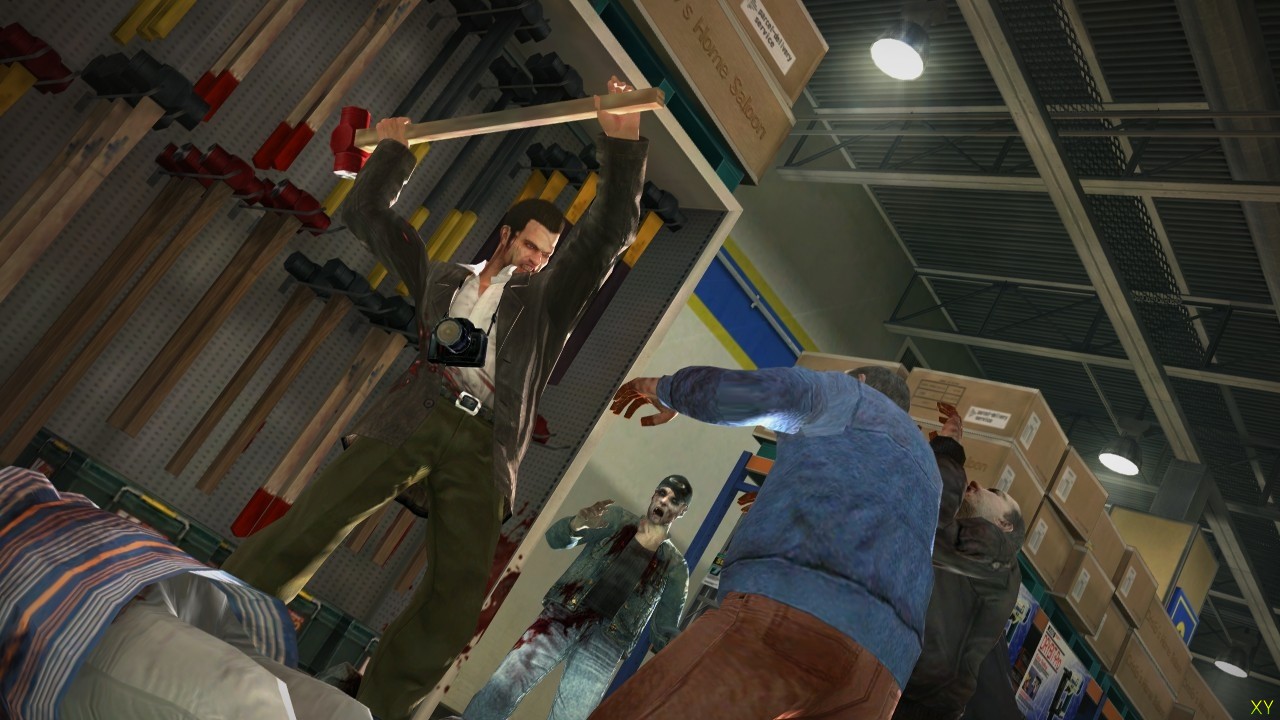
You know…like this
So usually when an incredible new power tool comes out, it tends to fly under my radar. However, by its basic design, the new SD Power Screwdriver by Worx is pretty hard to ignore.


First of all, yes it does look an awful lot like a really cool sci-fi gun. It’s certainly a design decision that makes the drill immediately visually appealing, but that’s only a skin deep observation of the hand cannon influences on this tool. The real pistol influenced feature of this semi-automatic screwdriver lies in the chamber function, which allows you to automatically swap and load six different drill bits without the hassle of having to change them out manually.
Outside of that, the drill boasts some other useful abilities such as its lightweight design and compact size allowing for ease of use in just about every situation, as well as a second cartridge so you can keep 12 different bits handy at any time. Plus you get a nice LED light right under the chamber for further ease of use in tight, dark areas (your probably not supposed to treat it as a laser sight but no one can stop you from doing so either).
As I mentioned, I’m not handy, but that doesn’t mean that I shouldn’t try to be. Little tasks of home improvement come up all the time, and many of the basic ones involve needing a good screwdriver. The new Worx looks to provide just that, and whether you’re looking to actually start filling up your own toolbox, or you know a handyman in the family who needs a gift come the holidays, the Worx is more than just a fun design, and looks to be one of the more versatile power screwdrivers on the market for its price.
Plus, there’s nothing technically stopping you from posing with it when no one is around and saying “Your move creep!”

You know…like this

You know somewhere between Pandora’s steady, old reliable model, Spotify’s have it all, take it anywhere incredible features, and various other stations like SHOUTcast covering some of the most obscure music out there, I guess I once felt content saying that the world of internet radio is pretty well covered.
And yet it seems like there is at least one more site out there that thinks that there is still fresh ground to tread in that particular field by catering to this wild idea that instead of a computer algorithm generating music selection, perhaps it would be preferable for human beings to take a stab at it.
That site is called Fuzz and, if you let them, they’d very much like to rock/rap/alternative/classical your world.
How? Well the entire site is made up of user created stations. Members can upload their personal music and create a radio station set to a theme of the music selection, with the built in system mixing the music together for you. Examples include the standards like classic rock or 90’s hip hop, but a quick search reveals more specific stations like classical dinner music or trendy sushi bar. A band search option is available to get you started, but the general idea is to start with music you are familiar with, and expand your interests, and favorite playlists, based on people who like those same bands or songs other available selections. It’s an idea that is automatically handled by computers on other sites, but Fuzz treats it much more like each user is the DJ to their own mix, complete with custom station names, backdrops, and comment and feedback features.
The creator of the site, Jeff Yasuda, has tooled around the internet radio scene for a while, and he and his team simply feel that it is more fun, and rewarding, for people to share music with people and not machines. It’s an idea that was encouraged by Yasuda’s other music app Blip.Fm, which allows people to play the music they’re listening to via Twitter and Facebook. The quiet success of that app has instilled Yasuda with the belief that a site that expands that idea into a full radio station could be a hit. Although, he is certainly aware of the long shot that any internet station is, as he reveals via a cryptic quote in an interview with Bloomberg.com when speaking of the internet radio industry:
“The space is crowded and the graveyard is long, deep and wide,”
So how is the site? While I’m personally still inclined to default to Spotify or Pandora for a kickback and let it play listening experience, Fuzz is infinitely more entertaining to just explore, whether it be for new music, or just to see what obscure and awesome stations people dream up. Though the battle for success, much less supremacy, is one that hasn’t even begun, to me it is indisputable that the basic idea behind Fuzz is a winner. Yasuda and co. are right in their idea that it is much more fun to put people in charge of a music selection, and the difference give Fuzz a personality in its beta stage that even the larger, and more established, stations don’t share.
In fact, even if Fuzz doesn’t take off, it’s that idea that I love, and which I hope ultimately influences other stations to implement something similar. Although, as so many other things in the tech business have proven, sometimes all it really does take is a good idea, and the proper amount of momentum to make it.
Now if you’ll excuse me, I think I may have to make a station featuring the music of Lou Reed, Leonard Cohen, and the soundtrack to the video game “Earthbound.“

© 2026 Gadget Teaser
Theme by Anders Noren — Up ↑
