Category: Video (Page 8 of 16)

LG says 7 years before OLED drops to LCD prices

LG OLED TV.If you’ve been sitting on your next TV purchase for that glut of OLED TVs to flood the market, you shouldn’t. LG’s VP of OLED sales and marketing, Won Kim, says prices won’t come down to LCD levels until 2016. Seven years is a long way off, and so much can change that Kim might be wrong, but in any case, OLEDs won’t be reasonable anytime soon.

Kim’s statements came shortly after LG announced a 15-inch OLED TV for its Korean market at the end of this year. No announcement for the US market, and that’s sort of been the standard so far. Only Sony sells an OLED stateside, and it’s just 11-inches. So it’s not just market prices we’re waiting on – the whole system has to mature enough to even be able to deliver the product.

Kim did say we would see 40-inch OLEDs by something like 2012, but you can bet they’ll be expensive. Of course by then who’s to say LCDs and Plasmas won’t be nearly as good as an OLED? The “absolute black” that makes the OLED so attractive (among some other features) is nearly attainable now with dimming LED TVs. In seven year this generation of technology could come a long way.


New iMac skimps on mini DisplayPort compatibility

Apple Mini DisplayPort.One of the best features of the new iMac is that the 27-incher can be used as a passive display via the mini DisplayPort. Unfortunately, that feature only currently works with other devices sporting the same port, which is virtually nothing. Not even Apple’s DVI adapter will work.

That’s not to say adapters won’t be supported later, it’s just a really great feature that, sadly, doesn’t work at launch. By adding the dummy monitor feature, Apple is essentially giving you a near-cinema display for just over half the price of a 30-inch monitor. Oh yeah, it also comes with a computer inside. But if you were thinking you’d hook that 360 up to your new iMac for extreme graphical sexiness, it looks like you’ll have to wait.

Netflix to launch streaming-only service

Netflix CEO Reed Hastings.During yesterday’s earnings conference call, Netflix CEO Reed Hastings announced plans to launch a streaming-only rental service. Unfortunately that program won’t be launched in the US. The new program is meant to expand the company’s international profile, but that’s not the only reason we won’t see it stateside. Hastings also said the model needs to be proven in other markets before expanding.

That probably means Netflix wants to know the model can be profitable before launching worldwide. The new system faces unique challenges as the rent-by-post services just aren’t an option in other countries. Hastings says the postal systems in other countries can be too “tricky” for physical mail to really work out.

I’m all for a streaming-only option. Sure, I can have that now as a part of regular Netflix service, but the DVDs are more of a hassle to me than anything else. Why bother with them when all I want is on-demand movie selection?

YouTube bandwidth costs just might be zero

YouTube logo.This summer gave us a lot of speculation about the actual cost of running YouTube. Now the video site serves up nearly 100 billion videos a year, making some analysts wonder where all the bandwidth money is coming from. As Arbor Networks, a net flow monitoring hardware provider, has it, there is no money changing hands. Google’s YouTube is being run on the good ol’ barter system.

“I think Google’s transit costs are close to zero,” says Craig Labovitz, Arbor Network’s chief scientist. Google also said earlier in the year that standard pricing models just don’t apply for YouTube. Google has bought up a bunch of unused fiber-optics known as dark fiber through which it sends data to other networks. Those ISPs then trade traffic with Google. It’s a system I’ll admit I don’t completely understand, but when you think about the sheer amount of traffic Google generates, it seems logical they could trade some of their own fiber-optic space for a little bandwidth here and there.

As my source article at Wired points out, this is a fundamental shift in the way the net is carried. It used to be run by smaller ISPs, paying into larger ISPs, paying into intercontinental networks. But when Google sends 10% of all internet traffic around the web, it’s bound to find new ways to compensate the bandwidth providers, which is exactly what the company has done for YouTube.

The Wired article is a great read, and full of some cool information for anyone curious about the Net’s structure and where things are headed.

Theaters Hope Tech Can Foil Pirates

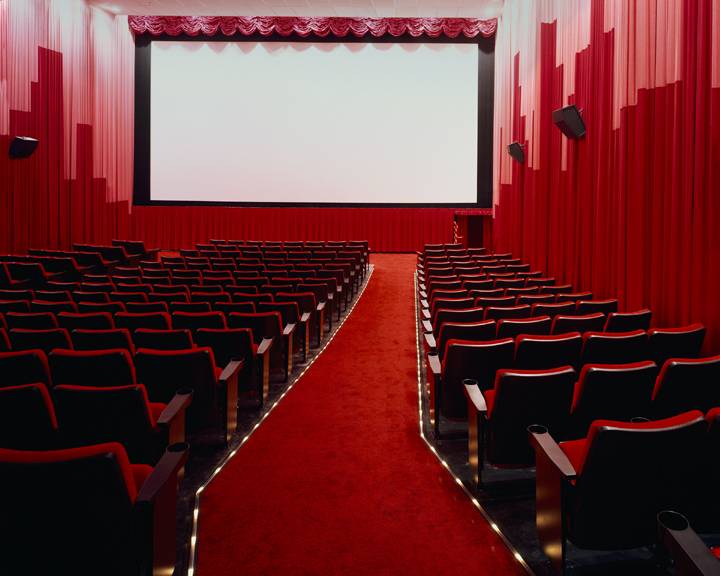
Movie theater.Movie theaters are looking into IR light as a way to help combat piracy from movie-goers with cameras. Japan’s National Institute of Informatics has requested help from Sharp, which came up with the following method.

By projecting IR from behind the movie screen, movie theaters can wash out a camcorder’s image by flooding the sensor with light that is undetectable to the human eye. The light passes through the screen through small holes designed for sound. The resulting effect is a grid of light over the image, rendering the cam unusable.

There is, of course, the problem of getting every theater to install these things, which will likely further increase ticket prices in a declining market. It was a nice thought guys. Really, it was.

« Older posts Newer posts »

© 2026 Gadget Teaser

Theme by Anders NorenUp ↑