Category: Lifestyle (Page 14 of 20)

5 Electronics-Related Tickets You Can Get While Driving

Drivers have so many options to keep themselves entertained when they are on the road: iPods, satellite radios, portable DVD players, instant messaging, email, and even the world wide web. Many of these allow drivers to stay connected to the world while they are on the wheel. However, what some call a means to staying connected, others might call a driving distraction. Since you are hurtling down the road driving 60 miles per hour in a metal machine weighing several hundred pounds, it might be a good idea to limit your distractions to a bare minimum.

And if drivers can’t control themselves, the friendly officers of the law are there to protect them from harming themselves or someone else. While people are aware of the direct relationship between speeding tickets and insurance rates going up, police will gladly give tickets for using electronic devices improperly, which will also cause rates to go up. 

1. Using a Cell Phone
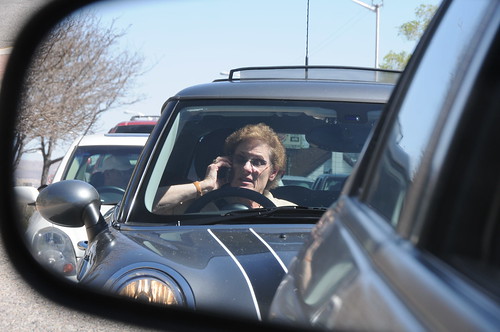
Cell phone use while driving.

In many countries, using a cell phone while driving is illegal and will result in a penalty or even worse. Some places have amended laws to allow cell phone use if the driver is using a hands-free device, such as a headset or Bluetooth, but that’s just mainly for answering calls.

2. Texting While Driving
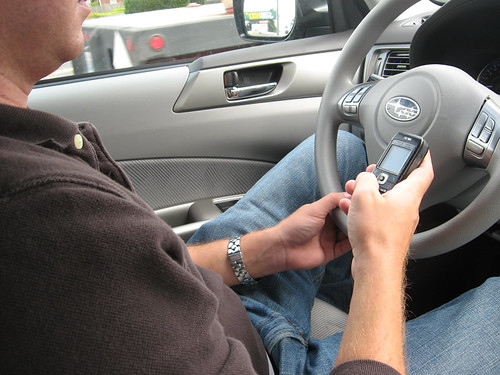
Texting while driving.

Given that texting requires the driver to focus and type on a tiny screen while actively ignoring the road, texting or emailing are completely illegal.

3. Watching a TV/DVD

TV/DVD.

It is not uncommon to follow a minivan and see the kids enjoying a cartoon in the back seat while mom or dad drives. It’s also not that uncommon to see a small screen running a DVD in the front seat being watched by the driver.

4. Having a Radar Detector
Even though radar detectors are still easy to buy in most electronics shops or online, many countries and states ban the use of any type of radar detector in the car.

5. Blasting the Radio
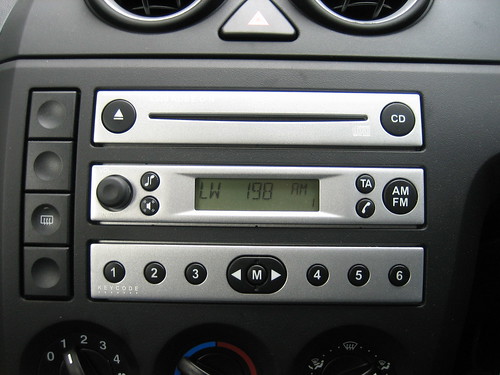
Radio.

Even if you have no one in the car but yourself, you can still find yourself at the receiving end of a ticket if your radio is too loud. Many cities have ordinances specifying a maximum decibel level and/or reasonable distance for your music to reach. Unlike the above-mentioned driving distractions, this one is a little harder to prove or disprove in court.

The List Could Go On and On
Distracted driving includes anything that takes the driver’s attention away from the road or causes them not to be in complete control of the vehicle. Even if you have a completely legal device in your car or are just enjoying a burger and fries and a cup of soda, you can still get a ticket.  
Bottom line: Drive safe and drive smart.

Johnny Depp can’t see his own 3D movies

Jack Sparrow on set.

That’s right – according to TG Daily, the actor famous for playing in one of Disney’s most spectacular 3D films, Pirates of the Caribbean: On Stranger Tides, can’t see 3D images.

Here’s what the actor said to Access Hollywood:

“I’m unable to see in 3D. My eyes don’t see in 3D. I have a weird eye… It just doesn’t work. It may come as a surprise to you, but I’ve never seen normally.”

The condition, though unnamed and not recorded, is actually fairly prevalent according to most sources. I wouldn’t exactly call it a surprise, but it’s certainly intriguing to see all the effort behind shooting in 3D wasted on one of the film’s most prominent actors.

The high cost of American tech consumption

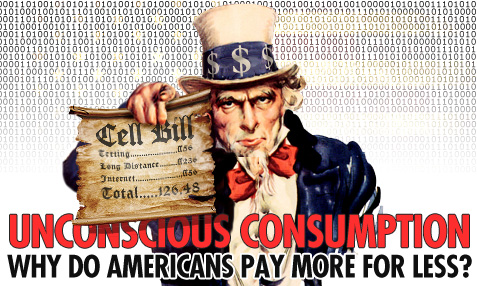
Unconscious Consumption.

This week I put together an article about the recent fee changes to Apple’s App Store subscriptions policies. If you haven’t been keeping up, Apple changed the way the App Store handles subscriptions this week so that the company will take a 30 percent cut. It also included some stipulations that will make it very difficult for content providers to get iPhone subscribers through means other than the App Store, virtually forcing the 30 percent fee upon third party content providers.

The news reminded me of the ways American corporations gouge consumers on tech. Here’s an excerpt from the article:

While we’re talking about cellular service, why not talk about our cellular plans? You’ve no doubt heard that texting fees are a total ripoff, but let me remind just how bad things are. SMS messages are nothing more than data – tiny bits of data at that – sent along their own control channel in the wireless spectrum. That same control is used, on many networks, to tell your phone that it has service. Do you see where this is going? Let me use a simple analogy. Let’s say my friend Joe sends me a letter every day to let me know he is still alive. One day, he starts writing personal messages at the bottom of the letter, things like “lol y u so funny,” but for adding that personal message, an insignificant amount of ink on a letter he was sending anyway, the post office charges him 20 cents for sending it and charges me 10 cents for receiving it. SMS transmission costs the carriers almost nothing, but they’ll charge me $20 a month for unlimited nothing. That little tirade of mine doesn’t even address the fact that I’m paying for an unlimited data plan, yet I’m getting charged again for sending miniscule amounts of data in a text.

If you think it’s like this everywhere, think again. A 2009 study by Organization for Economic Cooperation and Development showed that Americans pay more for cellular service than any of the 30 member countries it surveyed. For an average, medium-use package – 780 voice minutes, 600 text messages, 8 multimedia messages – Americans paid an average of $53 a month. Consumers in the Netherlands paid $11.

It doesn’t stop at cell service, either. To read more about our tech expenditures, head over to the Bullz-Eye gadgets channel.

The BBC offers an interesting look at the history of technology

A brief history of telephones

It’s hard to be surprised when people talk about the rapid growth of various sectors of the tech industry. It’s hard for me, anyway. That’s probably due to the fact that most of the crazy booms have been an integral part of my life – I was born after the “good old days,” when phones were tethered to the wall. The rate of innovation will always be interesting to me, even if I’ve missed some of it. To think about the difference between cell phones a decade ago and cell phones today is to see, in some small way, the crazy pace of development humanity has witnessed over the last half-century or so.

As is often the case, the BBC covers things best. Michael Blastland (awesome name) put together ‘A Brief History of Gadgets,’ complete with graphs like the one you see above. It’s definitely worth reading through, especially at a time of year when we’re wrapping and unwrapping some of the best technology our species has to offer. As Blastland says it, “For a while, the home phone will be part and parcel of many an internet connection. But will we, one day soon, watch the Christmas comedy repeats and, in a scene when the phone rings – Ha! It’s stuck to the wall by a wire. Hilarious! – wonder how those pre-mobile primitives managed?”

« Older posts Newer posts »

© 2026 Gadget Teaser

Theme by Anders NorenUp ↑